
Concrete Water Damage: What It Looks Like and What to Do About It


Most homeowners barely give their concrete a second thought until something starts to look off. A thin crack appears across the basement floor. A white, powdery layer creeps along the foundation wall. After a heavy rain, water begins pooling in places that used to stay completely dry.
These are not random surface issues. They are early warning signs of concrete water damage, and they often point to a deeper problem developing below the surface. What starts as something small can slowly spread through the structure, affecting more of the area over time.
The real concern is how unnoticed it can be at first. Concrete may look solid and unchanging, but water has a way of finding weak points and working through them gradually. By the time the signs become obvious, the damage is often already in progress.
This guide explains how water damages concrete, what to look for, and what you can do about it.
Can Water Really Damage Solid Concrete?
Yes, and it does so quietly. Concrete feels permanent, but it is porous. Over time, moisture breaks down the material from the inside, leading to gradual concrete deterioration and weakening of concrete structures.
In Canadian climates, this gets worse because of freeze thaw cycles. Water seeps into small cracks, freezes, expands, and forces those cracks wider. Then it thaws, and the cycle repeats. You can read more about these freeze thaw processes here:
Hydrostatic pressure is another cause. When saturated soil pushes against your concrete foundation, water is forced through any weak point it can find, especially hairline cracks. Rebar corrosion is also a factor: when steel reinforcement inside the slab rusts, it swells and cracks the concrete around it from within.
Concrete porosity ties it all together. Even a well poured slab absorbs moisture over time. As water moves in and out, it carries dissolved salts that gradually erode the structure. So if you are wondering if concrete can be damaged by water, the answer is absolutely yes. Over time, water will damage concrete if left untreated.
What Does Concrete Water Damage Look Like?
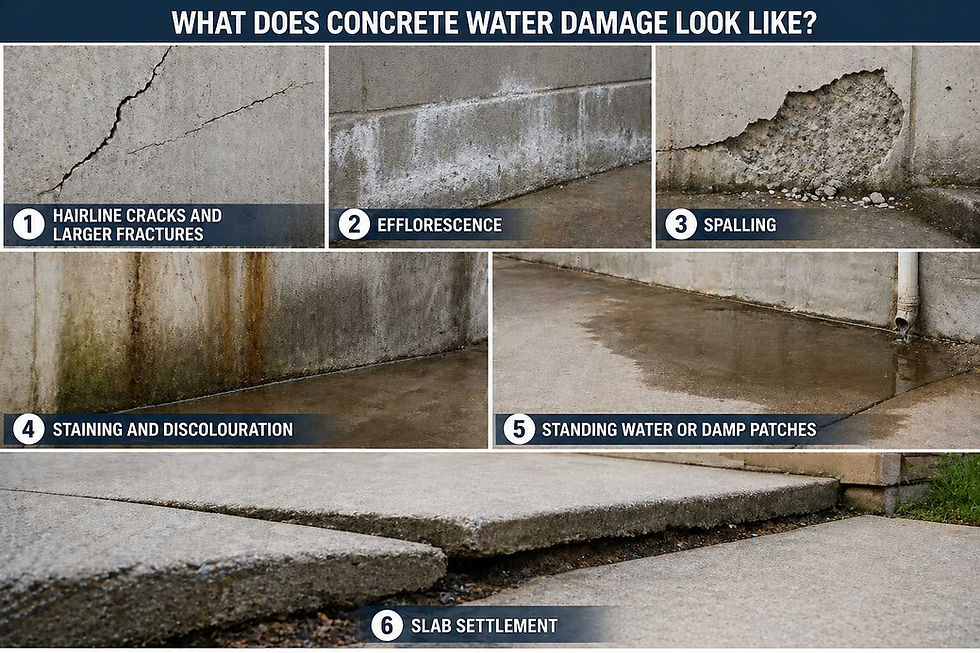
The signs are usually visible before things get severe. Here is what to watch for when dealing with water damage concrete.
Hairline cracks and larger fractures: Small cracks are common in older concrete, but cracks that grow, widen, or run diagonally need attention. They let more water in, which increases moisture intrusion and speeds up damage.
Efflorescence: That chalky white powder on your basement wall is efflorescence. It forms when water moves through the concrete, picks up minerals, and deposits them on the surface as it evaporates. It is not dangerous on its own, but it clearly shows the presence of water.
Spalling: This is when the concrete surface starts to flake, chip, or crumble. Freeze thaw damage, delamination, and even carbonation over time are common causes.
Staining and discolouration: Dark patches, rust coloured streaks, or green growth all point to persistent moisture in the affected area.
Standing water or damp patches: Water pooling near your foundation after rain is a sign that drainage or grading is pushing water toward your home.
Slab settlement: If part of your concrete floor or driveway looks sunken or uneven, soil erosion underneath may be the cause. Water washes away the base, and the slab drops, creating a water damage concrete slab issue that often affects larger concrete slabs.
What Happens If You Ignore It?

Water damage to the concrete floor does not stay in one place. It spreads.
The crack in your concrete floor lets moisture enter the soil underneath, which causes the ground to become soft and results in increased settlement. The structural integrity of your entire home suffers when concrete foundation walls sustain damage because this damage allows visible foundation cracks to develop. The foundation shift will create cracks in your drywall and cause your doors to stick and your windows to stop closing properly. Water intrusion through basement walls creates a damp basement that results in mould growth in the basement.
How to Check for Water Damage in Concrete
You do not need special equipment for a basic inspection. A good visual check covers most of the signs of water damage through its ability to detect cracks, efflorescence staining, spalling and dampness.
The moisture meter provides better accuracy for reading results. Pressed against the concrete surface, it measures how much moisture is present — even when the surface looks dry. This helps confirm the presence of water inside the material.
Check after heavy rain. Walk around your foundation and see how water behaves. Does it drain away from the house? Or does it pool near the walls?
When multiple indications of damage appear together in a building, including cracks, efflorescence and dampness, it indicates that hidden moisture problems exist which need professional moisture testing to determine their full extent.
How to Fix Water Damaged Concrete
The right fix depends on how severe the damage is. When it comes to how to fix water damaged concrete, addressing the source of water is just as important as repairing the surface.
Minor surface cracks: Small, stable hairline cracks can be filled with a concrete crack filler or concrete sealant. This helps prevent further water seepage.
Spalling and surface erosion: Resurfacing compounds can repair a damaged concrete surface. Larger areas usually require professional concrete repairs.
Efflorescence: The powder can be cleaned off, but without fixing the moisture issue, it will return. Waterproofing is often needed.
Foundation damage and structural cracks: These require professional assessment. Structural damage should never be ignored, as it affects the stability of concrete structures.
Slab settlement: Concrete levelling fills the voids beneath the slab while raising the slab to its original position. The situation requires either slab repair work or complete foundation waterproofing for advanced cases.
If you have water damage to your concrete floor slab or foundation in Burlington proper water damage restoration in Burlington will repair both the visible damage and the hidden water problem.
Know When to Get Help
Some concrete repairs are well within DIY range. The best option is to hire a professional when there is structural damage which affects your foundation or when water leaks continue to happen.
Concrete water damage is one of those issues where timing matters. The longer it’s ignored, the more expensive it becomes. Working with an experienced property restoration company means you get a full assessment of the affected area, not just a quick patch.
Frequently Asked Questions
How does water actually damage concrete?
Water enters concrete through tiny pores in the surface. Over time, pressure, temperature changes, and moisture buildup weaken the material. In colder climates, freeze thaw cycles cause water to expand inside the concrete, leading to cracks and surface damage.
What does concrete water damage look like?
Concrete water damage often shows up as hairline cracks, white powder on walls (efflorescence), damp patches, or flaking surfaces. You may also notice staining or uneven areas in a concrete floor or slab.
What is that white powder on my concrete wall?
That white powder is called efflorescence. It forms when water moves through the concrete and leaves mineral deposits behind. While it’s not harmful on its own, it’s a clear sign that moisture is present inside the wall.
What happens if I ignore the cracks in my concrete floor?
Cracks allow more water to enter the concrete and the soil beneath it. Over time, this can lead to slab settlement, structural damage, and higher repair costs. Small cracks can turn into larger problems if left untreated.
Can a damaged concrete foundation affect my whole house?
Yes. A damaged concrete foundation can impact the structural integrity of your home. You may notice wall cracks, uneven floors, or doors and windows that stop working properly as the foundation shifts.
How do I know if my concrete has water damage?
Look for common signs like cracks, damp spots, staining, or musty smells in areas like basement walls or floors. A moisture meter can help confirm if water is present inside the concrete.
How do I fix water damaged concrete?
The solution depends on the severity of the damage. Minor cracks can be sealed, while more serious issues may require concrete repairs, waterproofing, or slab leveling. It’s important to address the source of the moisture, not just the surface damage.
Can I repair it myself or do I need a professional?
Small surface cracks can often be handled on your own. However, if the damage involves the foundation, ongoing water leaks, or structural issues, it’s best to bring in a professional to properly fix the problem.
Can water really damage solid concrete?
Yes. Concrete may seem solid, but it is porous. Over time, water can penetrate the surface, weaken the material, and cause cracks or structural issues if the problem isn’t addressed.


Comments